Breathe Into Calm: My Qigong Journey to Natural Stress Relief
Stress sneaks into everyday life—tight shoulders, racing thoughts, restless nights. I’ve been there. What changed? Qigong. Not magic, not a quick fix, but a gentle, consistent practice rooted in traditional Chinese medicine. It helped me reconnect with my breath, slow down my mind, and find stillness amid chaos. This isn’t about curing anything—it’s about caring for yourself. In this guide, I’ll walk you through how simple qigong movements and breathing techniques can become your go-to tool for lasting calm. You don’t need special equipment, years of training, or hours of free time. Just a few minutes a day and a willingness to listen to your body can begin to shift your relationship with stress. This is a journey not toward perfection, but toward presence.
The Modern Stress Epidemic: Why We’re Always "On"
Life today moves fast. Emails arrive at midnight, social media scrolls endlessly, and the pressure to be productive rarely lets up. For many women between 30 and 55, this is daily reality—juggling family, work, household duties, and personal expectations. The result? A nervous system stuck in "fight or flight" mode. This state, meant for short-term survival, becomes chronic, wearing down the body over time. Physical signs appear: headaches, fatigue, muscle tension. Emotional signs follow: irritability, anxiety, and difficulty concentrating. Sleep suffers. Moods shift unpredictably. The World Health Organization has labeled stress a global health epidemic, not because it’s new, but because its constant presence is quietly undermining well-being.
What makes modern stress so persistent is its invisibility. Unlike physical danger, it doesn’t come with a clear end point. There’s no moment when the brain signals, "The threat is gone." Instead, the body remains on alert, releasing stress hormones like cortisol and adrenaline long after the initial trigger has passed. Over time, this hormonal imbalance affects every system—digestive, immune, cardiovascular. Research shows that chronic stress increases the risk of heart disease, weakens immunity, and contributes to mental health challenges. Yet many people accept this state as normal, not realizing that a different way of being is possible.
Enter qigong, a centuries-old practice that offers a gentle counterbalance to modern overstimulation. Unlike intense workouts or medication, qigong works with the body’s natural rhythms to restore equilibrium. It does not fight stress with force but with flow. By combining slow movement, intentional breath, and quiet focus, qigong signals safety to the nervous system. This shift allows the body to move out of survival mode and into a state of rest and repair. The beauty of qigong lies in its accessibility. It requires no special clothing, equipment, or fitness level. A chair or a small patch of floor is enough. It can be practiced by anyone, at any age, in any condition.
What sets qigong apart from other stress-relief methods is its holistic foundation. It is not simply about relaxation—it is about cultivating awareness and balance from within. Rooted in traditional Chinese medicine, qigong views health as the free flow of vital energy, or Qi, through the body. When Qi becomes blocked or unbalanced, discomfort and illness may follow. Qigong aims to clear these blockages and restore harmony. This perspective offers a deeper understanding of stress—not as an external force to be endured, but as an internal signal that something is out of alignment. By learning to listen to this signal, we begin to respond with care rather than resistance.
What Is Qigong? More Than Just Movement
At its core, qigong is the practice of cultivating life energy through coordinated breath, gentle movement, and mindful attention. The word itself comes from two Chinese terms: "Qi," meaning vital energy or life force, and "Gong," meaning skill or practice developed over time. Together, qigong translates to "energy cultivation." This practice has been part of Chinese healing traditions for thousands of years, used by healers, martial artists, and everyday people to maintain health and vitality. Unlike Western approaches that often separate mind and body, qigong treats them as deeply interconnected. Every breath, every motion, every moment of focus contributes to overall well-being.
Qigong is often mistaken for yoga or tai chi, and while there are similarities, it has its own distinct identity. Yoga, with its roots in Indian philosophy, often emphasizes physical postures and spiritual discipline. Tai chi is a martial art that evolved into a moving meditation, typically practiced in flowing sequences. Qigong, by contrast, can be simpler and more adaptable. Some forms involve standing still, others use repetitive motions, and many focus primarily on breath and visualization. This flexibility makes qigong especially suitable for those new to mind-body practices or managing physical limitations. There is no need to touch your toes or hold difficult poses. The only requirement is intention.
In traditional Chinese medicine, Qi flows through pathways in the body called meridians. When this flow is smooth and balanced, health is maintained. When it is disrupted—by stress, injury, or emotional strain—imbalance follows. Qigong works by stimulating these pathways through rhythmic breathing and gentle physical activity. For example, raising the arms slowly while inhaling can lift energy upward, while lowering them while exhaling helps release tension. These movements are not random; they follow principles of energy dynamics that have been refined over generations. The result is a practice that feels both intuitive and effective.
One of the most powerful aspects of qigong is its emphasis on self-regulation. In a world full of external demands, qigong offers a way to turn inward. It teaches that healing does not always require intervention from outside—from pills, procedures, or experts. Sometimes, the most profound changes begin with simply becoming present. You do not need to believe in energy to benefit from qigong. You only need to breathe, move gently, and pay attention. Over time, many practitioners report a greater sense of inner calm, improved physical comfort, and a deeper connection to their bodies. These are not mystical claims, but common experiences shared across cultures and generations.
The Science Behind the Stillness: How Qigong Affects the Body
While qigong originates in ancient tradition, modern science increasingly supports its benefits. Studies have shown that regular qigong practice can significantly reduce cortisol, the primary stress hormone. Lower cortisol levels are linked to improved sleep, better mood, and stronger immune function. In one clinical trial, participants who practiced qigong for eight weeks reported reduced anxiety and fatigue compared to a control group. Another study found improvements in heart rate variability—a key marker of nervous system resilience. These findings suggest that qigong does more than provide temporary relief; it helps retrain the body’s response to stress over time.
The mechanism behind these changes lies in the autonomic nervous system, which controls involuntary functions like heart rate, digestion, and breathing. This system has two main branches: the sympathetic, which activates during stress, and the parasympathetic, which promotes relaxation and recovery. Qigong’s slow, rhythmic breathing directly stimulates the vagus nerve, a major pathway of the parasympathetic system. This stimulation sends a signal to the brain that it is safe to relax. As a result, heart rate slows, blood pressure decreases, and muscles begin to release tension. This is not a passive state but an active restoration—what some researchers call the "rest-and-digest" response.
Physical benefits extend beyond the nervous system. Regular practice improves posture by encouraging alignment and body awareness. Gentle weight shifts and arm movements enhance joint mobility, particularly in the shoulders, hips, and spine. Circulation improves as muscles engage in a low-impact way, delivering oxygen and nutrients more efficiently. For women managing the physical demands of daily life—carrying children, standing for long periods, or sitting at a desk—these subtle improvements can make a meaningful difference. Over time, many notice less stiffness, fewer aches, and greater ease in movement.
Equally important are the psychological effects. Qigong has been shown to enhance focus and emotional regulation. By training attention on breath and movement, practitioners develop greater mental clarity. This mindfulness reduces mental chatter and helps break the cycle of rumination—repetitive, negative thinking that often accompanies stress. In educational and workplace settings, qigong has been used to improve concentration and reduce burnout. For caregivers, who often put their own needs last, this mental reset can be transformative. It is not about eliminating thoughts, but about creating space between them—space where calm can grow.
Starting Small: Building Your First Qigong Routine
The best way to begin qigong is with simplicity. Many people assume they need hours of practice or a perfect environment, but the truth is, even three to five minutes a day can yield results. The key is consistency. Think of it like watering a plant—small, regular care leads to steady growth. Choose a time that fits naturally into your day. Morning light is ideal, as it helps set a calm tone. But any quiet moment—after waking, before bed, during a break—can work. Find a space where you won’t be disturbed, even if it’s just a corner of your living room. Wear comfortable clothes and stand barefoot or in soft shoes.
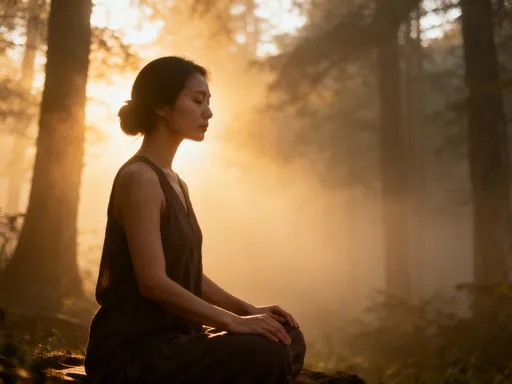
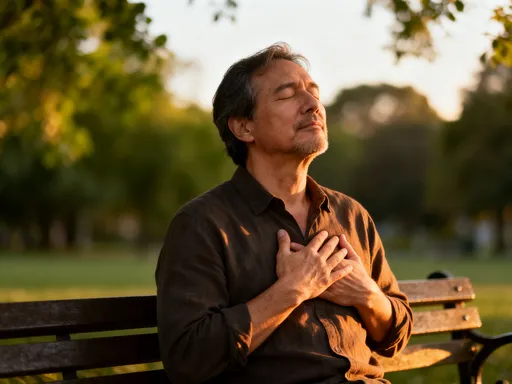
A basic routine can include three simple elements: a standing posture, diaphragmatic breathing, and gentle arm movements. Begin by standing with feet shoulder-width apart, knees slightly bent, spine aligned. Let your arms hang loosely at your sides. Close your eyes or soften your gaze. Place your attention on your breath. Inhale slowly through your nose, allowing your belly to rise. Exhale fully through your mouth, letting your belly fall. This deep, abdominal breathing activates the diaphragm and signals relaxation to the nervous system. Practice this for one to two minutes, just feeling the rhythm of your breath.
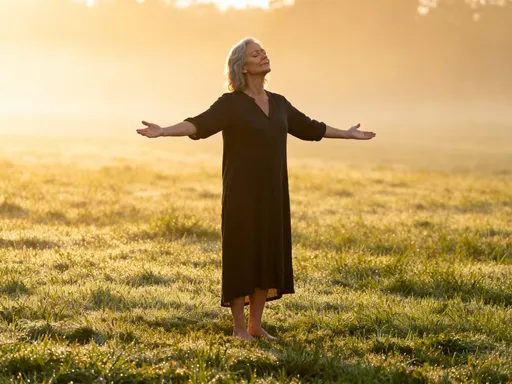
Next, add a simple arm movement. As you inhale, slowly raise your arms out to the sides and up overhead, palms facing up. Imagine lifting a ball of warm energy. As you exhale, lower your arms back down, palms turning inward, as if gently pressing a beach ball into the sand. Repeat this motion five to ten times, moving slowly and smoothly. Let your breath guide the pace. There is no need to rush or strain. If standing is uncomfortable, you can do this seated in a chair, lifting your arms to shoulder height. The goal is not performance, but presence.
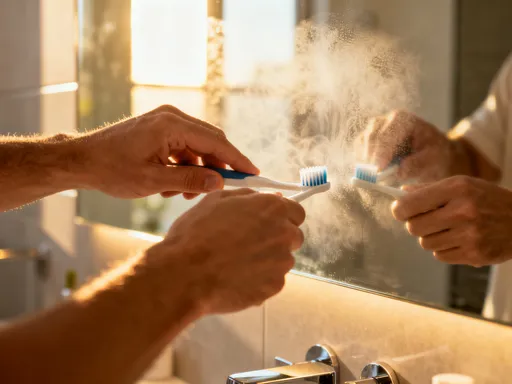
To make this practice sustainable, attach it to an existing habit. For example, do your qigong routine right after brushing your teeth in the morning or before turning off the lights at night. This habit-stacking approach increases the likelihood of sticking with it. You might also set a gentle reminder on your phone or leave a note where you’ll see it. On days when you feel too tired or busy, shorten the practice—two minutes is better than none. Remember, progress is not measured by duration but by regularity. Over time, you may naturally want to extend your sessions, but the foundation is daily return.
Letting Go of Tension: Qigong Techniques for Instant Calm
Sometimes, stress strikes suddenly—a tense conversation, a missed deadline, a child’s tantrum. In these moments, you need relief fast. Qigong offers simple, effective tools that can be used anywhere, anytime. One such technique is the "Microcosmic Orbit" breathing method. This involves visualizing energy moving in a loop from the lower abdomen, up the spine, over the head, and down the front of the body. As you inhale, imagine energy rising; as you exhale, imagine it descending. This circular breathing pattern calms the mind by creating a sense of internal flow. Practicing it for just a few breaths can quiet mental chatter and restore focus.
Another powerful exercise is "Shaking the Tree." Stand with feet shoulder-width apart, knees soft. Let your arms hang loosely. Begin to gently shake your whole body, starting from the legs and moving upward. Imagine you are a tree in the wind, releasing leaves of tension. Shake for 30 to 60 seconds, then stop and stand still. Notice the tingling in your hands, the warmth in your joints, the lightness in your chest. This practice helps discharge physical tension and resets the nervous system. It may feel unusual at first, but many find it surprisingly liberating. It can be done discreetly—even in a bathroom stall or behind a closed office door.
The "Six Healing Sounds" is another traditional method for emotional balance. Each sound corresponds to an organ and a specific emotion: anger (liver), anxiety (lungs), impatience (heart), worry (spleen), fear (kidneys), and frustration (triple burner). To release stress, you make a soft sound on the exhale—such as "shhh" for the liver—while placing a hand on the corresponding area. This combines breath, sound, and touch to gently process emotional energy. While it may seem simple, the act of acknowledging and releasing emotions in a structured way can be deeply soothing. It teaches that feelings are not enemies to be suppressed, but energies to be moved.
These techniques are especially useful in high-pressure moments. Try the Microcosmic Orbit before a meeting, Shaking the Tree after a long drive, or a Healing Sound when you feel overwhelmed. They take less than two minutes and require no preparation. By having these tools ready, you build resilience. You no longer have to wait for stress to pass—you can actively shift your state. Over time, these micro-practices become second nature, woven into the fabric of your day like brushing your hair or sipping tea.
Listening to Your Body: Cultivating Awareness Without Judgment
One of the most transformative aspects of qigong is the shift from doing to being. In a culture that values productivity, it can feel strange to simply stand and breathe. But qigong teaches that presence is a form of action. The practice is not about achieving a perfect pose or mastering a sequence. It is about tuning in—feeling the weight of your feet on the floor, the rise and fall of your chest, the subtle warmth in your palms. These sensations are messages from your body, often ignored in daily life. When you begin to listen, you develop a deeper relationship with yourself.
This awareness is not judgmental. There is no "good" or "bad" way to feel during qigong. Some days you may feel energized; other days, heavy or distracted. All of it is valid. The practice invites you to observe without trying to fix. This non-judgmental attention reduces the secondary stress that comes from criticizing yourself—"I should be calmer," "I’m not doing this right." Instead, you learn to meet yourself where you are. This builds self-trust, a quiet confidence that you can handle whatever arises.
Physical sensations often mirror emotional states. Tight shoulders may reflect responsibility carried too long. A clenched jaw may signal unspoken frustration. Qigong does not demand you analyze these connections, but over time, they become clearer. You may notice that after a few weeks of practice, you catch yourself tensing up during a phone call—and then remember to breathe. This moment of awareness is progress. It means you are no longer living on autopilot. You are reclaiming agency over your nervous system.
It is also important to honor your limits. Qigong is not about pushing through pain or discomfort. If a movement causes strain, modify it or skip it. Rest is part of the practice. In fact, some qigong forms are done lying down, focusing solely on breath and visualization. This emphasis on gentleness makes it sustainable. You are not training for a race; you are cultivating a lifelong companion for well-being. The body responds best to kindness, not force. By practicing with care, you model self-respect—a lesson that extends far beyond the few minutes of daily practice.
Making It Last: Turning Practice Into Lifestyle
Sustaining any new habit requires more than motivation—it requires integration. Qigong becomes most powerful when it moves beyond the formal practice and into everyday life. This means carrying its principles with you: mindful breathing at red lights, conscious posture while washing dishes, a moment of stillness before answering a text. These small acts accumulate, reshaping your relationship with time and attention. You begin to move through the world with greater ease, not because life has changed, but because your response to it has.
Pairing qigong with other wellness habits enhances its effects. Staying hydrated supports energy flow. Spending time in nature grounds the nervous system. Reducing screen time creates space for reflection. These are not strict rules, but natural companions to a qigong practice. They form a gentle ecosystem of care. You don’t have to do everything at once. Start with one small addition—perhaps a five-minute walk after practice, or drinking a glass of water upon waking. Over time, these choices reinforce each other, building a lifestyle rooted in balance.
Of course, obstacles will arise. Busy days, travel, illness, or emotional lows can disrupt routine. During these times, it helps to release the idea of perfection. Missing a day—or a week—does not mean failure. The practice is always there, waiting for your return. If motivation dips, remind yourself why you started. Recall how you felt after your first few sessions—lighter, clearer, more centered. Keep a simple journal to track subtle shifts. Sometimes, progress is only visible in hindsight.
Remember, healing is not linear. Some days your practice will feel deep and nourishing. Other days, it may feel flat or mechanical. Both are part of the journey. What matters is showing up, even if only for a few breaths. Over months and years, these moments add up, forming a quiet foundation of resilience. You may not always feel calm, but you will know how to return to it. That knowledge is a gift—one you give yourself, breath by breath.
Conclusion: A Lifelong Companion for Inner Peace
Qigong is not a cure for life’s challenges. It will not erase deadlines, solve family conflicts, or stop the world from moving fast. But it offers something more enduring: the ability to meet each moment with greater clarity and calm. It teaches that peace is not the absence of stress, but the presence of balance. By cultivating your breath, your awareness, and your inner stillness, you develop a quiet strength that no external circumstance can take away.
This practice is not reserved for monks or mystics. It belongs to anyone who seeks a gentler way of living. For women navigating the complex demands of modern life, qigong offers a sanctuary—a daily act of self-respect. It reminds you that you are more than your roles, your responsibilities, your to-do list. You are a living system, worthy of care and attention.
Begin where you are. Use what you have. Do what you can. A few minutes of breath and movement each day can open a doorway to a calmer, clearer way of being. You do not need to believe in energy or master ancient wisdom. You only need to show up, be gentle, and breathe. Over time, you may find that the stillness you once searched for is already within you—waiting, breath by breath, to be remembered.